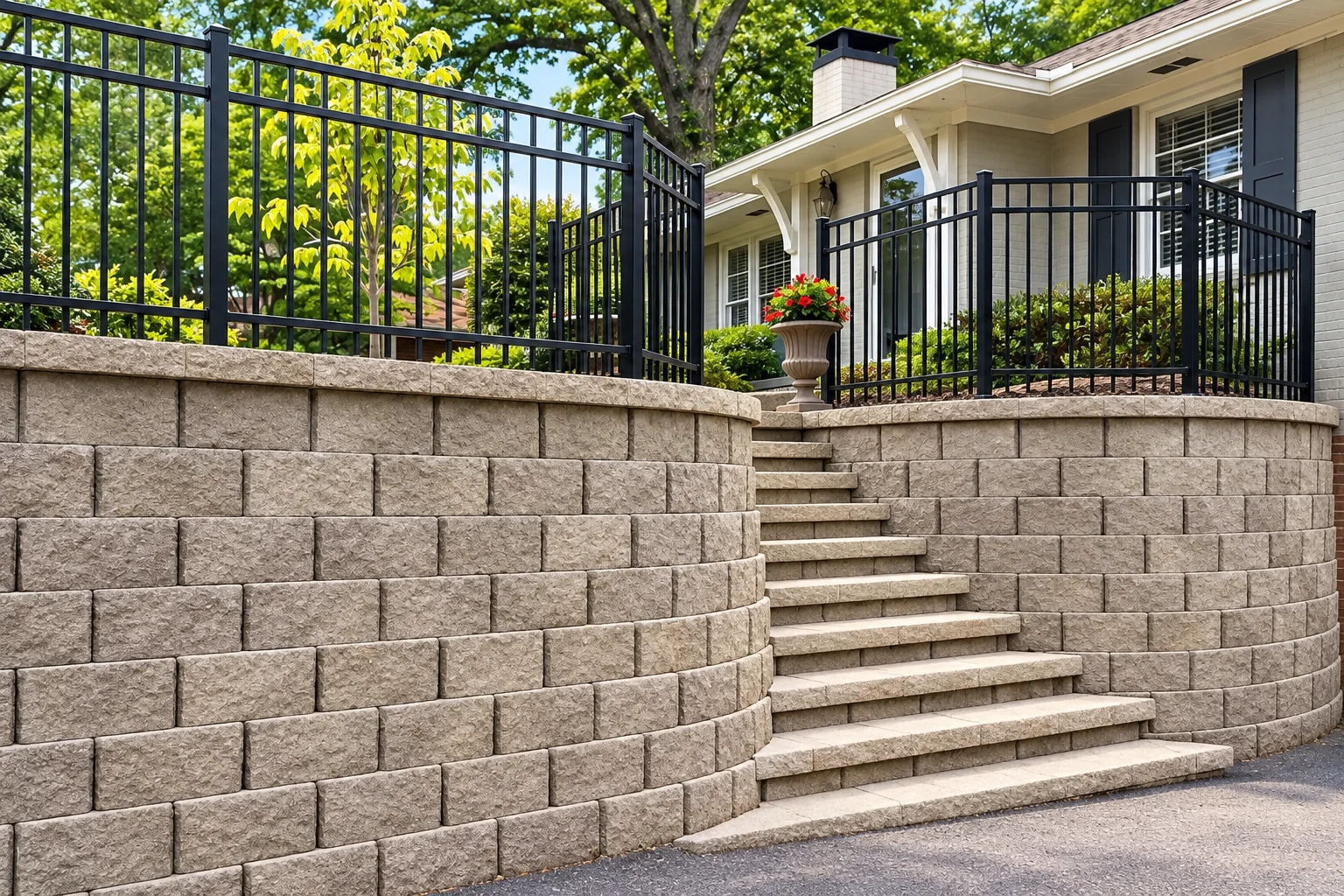
Concrete steps construction in Portsmouth NH - an entry that sits on solid ground
Front steps cracked, tipping or pulling away from the house? We build new precast or poured steps that sit on solid support, not loose fill.
- Fully licensed and insured.
- Free estimates at your property.
- We respond within 1 business day.
What does it take to build new concrete steps in Portsmouth?
The short answer: Concrete steps construction in Portsmouth means tearing out a worn or unsafe set and building new steps, precast or poured in place, that sit on firm support and give you a safe, even way in and out of your house.
Most calls start with steps that have cracked, settled away from the door or started holding water on the treads. The price turns on how many steps you need, precast or poured, how much old concrete has to come out and what the new steps tie into, while the schedule turns on the weather, any city review and the base work underneath. Steps often meet a walk, so if yours is heaved too, ask about concrete sidewalk building at the same visit, and the written estimate I send afterward gives you the number for your own entry.
How do you know your front steps need replacing?
Cracks across the treads
Cracks running across a tread, or a step splitting off the landing, usually mean the ground under it has moved. Water gets into those cracks and every freeze pushes them wider, so a thin crack this fall can be a loose chunk by spring.
A gap at the house
A gap opening between the top step and your foundation usually means the steps were set on fill that was never packed and are settling with it. That gap lets rain run toward your foundation, and the steps keep tipping for as long as the dirt keeps sinking.
Water pooling at the door
Treads that tip toward the house send water to your threshold instead of off the edge. Over time that soaks the door sill and the concrete both, and in winter it turns your top step into an ice patch.
How we handle concrete steps construction
I start by asking how you use the entry and looking at what the steps have to meet, because steps can rest on the ground, connect to a landing or the foundation, or span like a stair, and that choice decides the steel inside and what goes under them. We go over precast and poured steps with you so you can pick what fits your entry, then our crew breaks out the old set, digs out the soft dirt and loose fill and packs a firm base, since steps set on loose fill settle right along with it. For poured steps we build the forms, set rebar, the steel that holds the concrete together if it cracks, pour, and give the treads a broom finish, a light texture that keeps your feet from slipping. Then they cure, the slow hardening that gives concrete its strength, and we check that the treads pitch slightly away from the door so rain runs off. If the budget gets tight, I'd rather you spend it on the base than on a fancier finish, because nobody sees the base on day one but it's what holds the steps up years from now.
New steps often go with a bigger project. If you're adding a porch, mudroom or small addition, the steps usually tie into the slab foundation building for that space, and on larger builds we plan them alongside the foundation installation so everything rests on the same solid support.
Precast steps
Precast steps suit a standard entry where your door height and yard line up with a stock unit, and they usually cost less because they're hollow and quicker to set. The trade-off is fewer sizes to choose from, so they fit best where your entry is fairly ordinary.
Poured steps
Poured steps suit an entry with an odd rise, a wide landing or a curve, because we form them to your exact size right on site. They take more labor and a cure before use, but you aren't limited to the sizes a supplier makes.
What happens when you call about new steps in Portsmouth?
From your first call to the day you walk up the new treads, here's how a steps job runs with us and who handles each part along the way.
- Step 01
Call or send a message
Tell us what's wrong with your steps and where the house is. We get back to you to set a time for me to come out.
- Step 02
I walk your entry with you
I look at what the steps tie into, check where water runs off the roof and yard, and ask how you use the door. You then get a written estimate that lays out the work and the price, so you know exactly what you're agreeing to.
- Step 03
We sort out city review
We help pull together the sketches, site plans or drawings the building office asks for. If your house is in the Historic District, the Commission meets once a month, so plan on at least an extra month for that review, and we build it into the schedule from the start.
- Step 04
We prep, pour and clean
We pick a pour date with the season in mind, then our crew preps the base, pours or sets the steps, finishes them and cleans up. On poured steps you'll stay off them while they cure, and I'll tell you when they're ready to use.
Concrete steps construction and Portsmouth's permit rules
The city's Inspection Office issues building permits for new construction and general renovation, and its list names structural changes or repairs, not concrete steps, so whether your job needs a permit isn't settled until you ask. You can call the office at 603-610-7243 with permitting questions, and we check what they need before we set a pour date. Two other city rules can come into play. If your house sits in one of the Historic District Zoning Areas, a change to the outside of the building needs a separate Historic District Commission application with drawings or photographs, and if the work will take up the city sidewalk, you need a Street Encumbrance Permit from the same office first, applied for through ViewPoint Cloud.
A lot of the entries we see here, and on jobs in Kittery and Rye, sit close to the sidewalk or at the bottom of a yard that slopes toward the door, so the steps have to tie into the house and still shed water away from it. Those are the jobs I like figuring out, and an extra hour at the estimate usually saves you trouble later.
Get a written estimate for new concrete steps
We respond within 1 business day to set up a visit, and the estimate is free, done at your property, with no pressure to book. I come out myself, walk your entry, and then send you the written estimate.
Why Portsmouth homeowners call Portsmouth Concrete Works
I write every estimate myself
I come out to look at your entry and write the estimate myself, our own crew does the work, and I'm on site for the pours. The person who measured your steps is the one watching them go in.
Running this business since 2017
I started Portsmouth Concrete Works in 2017 after years on other crews learning flatwork, the driveways, walks and patios that lie flat on the ground, and foundations. Steps sit right where those two meet, so both halves of that training show up on an entry job.
Fully licensed and insured
We're fully licensed and insured. That matters when a crew is breaking out concrete and pouring right at your front door.
Working both sides of the Piscataqua
We're based in Portsmouth and work in the cities around it in New Hampshire and Maine, often on sloped yards and tight side lots other crews pass on. If your entry is awkward, that's the kind of job we like.
On new steps, what counts most is the support underneath and where the water goes, and you can't see either once the concrete is in. Ask for your estimate and I'll come take a look at your entry.
Concrete steps questions from Portsmouth homeowners
How much do concrete steps cost in Portsmouth, NH?
Installed concrete steps across the US usually cost about $100 to $500 per step, and that's a national figure, not our price. A tough tear-out, a wide landing or steps tied into a new foundation push a job toward the high end. Your own number comes in the written estimate after I see the entry.
How long do concrete steps last?
Concrete steps last about 30 to 40 years with proper care and upkeep, going by national figures. That long life depends on keeping water moving off them and fixing small problems early, so plan on some care for as long as you own them. Every set we build is backed by our satisfaction guarantee.
Can concrete steps be poured in winter in New Hampshire?
Yes, as long as the fresh concrete is kept from freezing for about two days after the pour, because concrete that freezes early loses strength and won't hold up. Cold-weather work adds cost for slower crews and for blankets, tarps and heaters, but it usually keeps a project on schedule. The choice is yours, and we'll talk through whether protecting a winter pour or waiting for milder weather costs you less.
How do I take care of new concrete steps in the winter?
Use clean sand for grip on new steps and skip deicing chemicals where you can, which is what the ready-mixed concrete industry's guidance advises. If you do use a deicer, that same guidance says to put it down in moderate amounts, since heavy use makes the surface more likely to flake off in thin layers.
What is the best way to keep new concrete steps from sinking?
Ask any contractor how the steps will be supported and what will sit under them, since a steps guide points out that even a decorative set needs more than uncompacted fill to rest on. Steps that sink usually went in on dirt that settled after the pour. At the estimate I'll show you what we plan to put under yours.
Will my new concrete steps crack like the old ones?
Usually not, if the cause of the old cracks gets fixed first, and that's most often a soft base or water running under the steps. Concrete can still get fine cracks as it shrinks, so on poured steps and landings we plan control joints, shallow cuts that give a crack a straight place to form where you won't notice it.
Related concrete work around your new steps
Slab foundation building
Planning a mudroom, porch or small addition at the top of your steps? A slab foundation gives that new space a firm, level floor to start from.
Foundation installation
When a bigger addition or new build is in the works, the foundation sets the height and support your entry steps have to meet, so plan both together.
Send us photos of your steps
Call (603) 956-1034 or send a message with photos of the entry, the number of steps and whether your house is in the Historic District, so I show up already knowing what to look for.