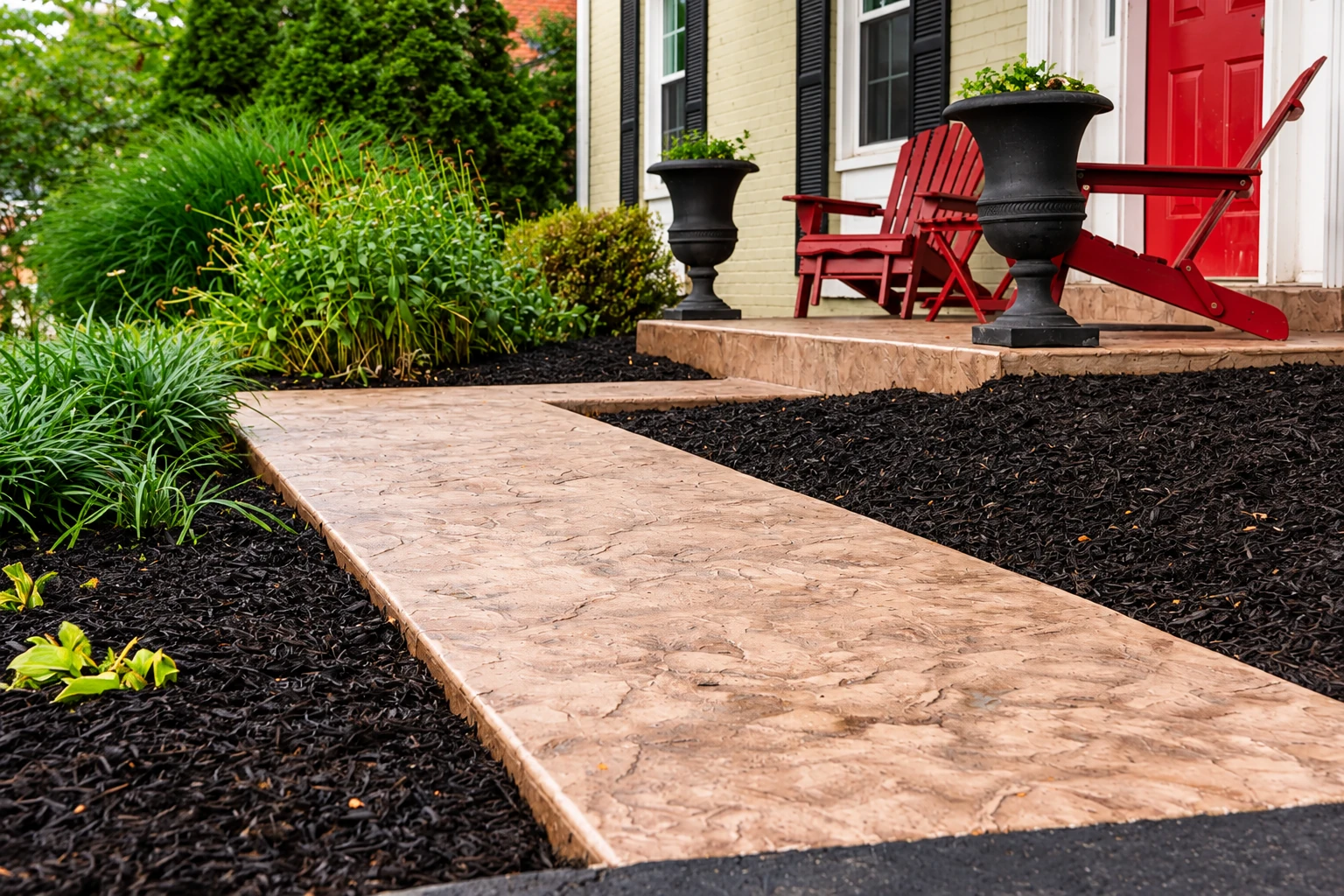
Concrete sidewalk building in Portsmouth NH - a walk with good grip on wet days
Cracked, heaved or sinking walk out front? We dig out the soft dirt, pack a firm base and pour a walk that drains and grips.
- Fully licensed and insured.
- Free estimates at your property.
- We respond within 1 business day.
What does it take to build a new concrete sidewalk in Portsmouth?
The short answer: Concrete sidewalk building in Portsmouth starts with digging out the topsoil and anything soft under the old walk, packing a firm base, then pouring and finishing a new walk that stays even underfoot and sheds water away from your house.
Most people call us when the old walk has heaved, cracked or started holding puddles, or when there's a worn path across the lawn that should have been concrete years ago. The price moves with the length and width of the walk, how much old concrete and soil we have to haul out, whether it crosses a driveway or a utility line, and the finish you pick. The schedule turns mostly on the weather and on whether the city has to sign off on digging near the street, so I'll walk it with you and put your own figure in a written estimate.
How do you know your sidewalk needs replacing?
One slab sits higher
If one section has tipped up or dropped below the next, the dirt under it has usually settled or a tree root has pushed it. That edge catches toes and shovel blades, and it gets worse every year as more water gets under it.
Puddles that turn icy
Water that sits in the same low spots after rain means the walk has lost its fall or was poured flat to begin with. In winter those puddles freeze into the slickest part of your path, and the water that soaks in keeps working at the surface.
Top layer flaking off
When the surface peels away in thin flakes and leaves rough, pitted patches, the top of the slab was often weak from the start or has been hit with the wrong salt. It spreads each winter and patches rarely hold for long, so it's usually time for a new walk.
How we build a concrete sidewalk
We tear out the old walk if there is one and dig out the topsoil and anything soft or full of roots, because that material keeps settling and takes the concrete down with it. Then we pack the subgrade, the dirt and gravel the slab sits on, so the walk has firm, even support from end to end, and we set the forms so the walk falls slightly away from your house and water runs off instead of sitting. I pay close attention where the walk meets a driveway or crosses a utility line, since those are the spots that move, and we make sure the base there is as solid as everywhere else. We pour in the cooler part of the day and give the top a broom finish, a light texture dragged across it so your feet have grip when it's wet, because a walk has to be safe in the rain. We also cut control joints, shallow grooves that give the slab a straight place to crack instead of a random one, and curing, keeping the concrete damp and protected while it hardens, starts as soon as the finishing is done. If the budget's tight, I'd rather keep the full dig-out and packed base and go simpler on the finish, because the base is the part nobody sees on day one and the only part you can't fix later without tearing the walk out.
A lot of people have us look at the garage while we're there, because a cracked or sunken slab inside often has the same base problems, and garage floor concrete is work we do too. If you want the walk to look like more than plain gray, decorative concrete such as color, a scored pattern or a border can dress it up without giving up the grip.
Plain broom-finished walk
This suits most front walks, side paths and walks to the back door, because the textured top grips in rain and slush and it's easy to shovel. It also puts most of your budget into the base instead of the surface, which is where I'd want it.
Walk with a border or color
This suits a front entry where the walk is the first thing people see, and a border can echo a brick street walk or the trim on the house. We keep the main walking surface textured so it still grips when it's wet, since a smooth decorative top can get slick.
What happens after you call about a new sidewalk?
Here's how a new sidewalk goes with us, from your first call to the day the forms come off. I'm involved at every step, and our own crew does the work.
- Step 01
Call or send a message
Call or use the form, and we'll set a time for me to come out and see the walk. A photo of the old walk or the spot you have in mind helps me come prepared.
- Step 02
I walk the site with you
I look at where the water runs, what's under the old walk and how you'll use the path, and I ask a lot of questions about the spot. Then I send a written estimate that lists the tear-out, base work, finish and any driveway crossing, so you can see where the money goes.
- Step 03
Sort permits, mark utilities, dig
We sort out any permit questions and pick a pour date with the season in mind, and since New Hampshire law requires a call to Dig Safe, the free utility-marking service, at least 72 business hours before digging, that wait goes into the plan. Then our crew digs out and packs the base.
- Step 04
Pour, finish and clean up
I'm on site for the pour, and once the finishing is done we haul away the old concrete and backfill along the edges. We'll tell you when the walk is ready for feet and when a driveway crossing is ready for cars, since that depends on the weather it cured in.
What changes a concrete sidewalk job in Portsmouth
If any part of your new walk runs in a public way or on City-owned land, such as a walk along the street, the Portsmouth Department of Public Works issues the permit that's required before any digging there, so the first thing I check is whether your walk touches that ground. The city only grants that permit to a contractor holding its Excavation Contractor License, which is renewed every year, so it's fair to ask any crew you're comparing whether theirs is current. For a walk that stays on your own lot, I don't assume anything either way. Before we set a pour date, we check with the city on what it needs and help pull together any sketch or site plan it asks for.
A lot of Portsmouth walks run tight between an older house, a driveway and the street, and the city's construction standards include concrete walks, brick walks and concrete with a brick border, so when a new walk ties into the street side I'll ask whether you want it to match. We're based here and work in the cities around Portsmouth on both sides of the Piscataqua River, and we run into the same tight side lots and old walks over buried lines on jobs in Kittery and Dover.
Get a written estimate for your new concrete walk
We reply within one business day to set up a visit, and I come out myself to walk the site and ask how you use the path. After that I send a free written estimate, and there's no pressure to book.
Why Portsmouth homeowners call Portsmouth Concrete Works
I write every estimate myself
I come out to look at the job and write the estimate, and I'm on site for the pours. The person who saw your slope and your drainage is there when the concrete goes in, and our own crew does the work.
Pouring flatwork since 2017
I grew up patching barn floors on a farm and spent years on other crews learning flatwork, the walks, driveways and patios that lie on the ground, before starting this business in 2017. We like the awkward jobs, like sloped yards and tight side lots, and a front walk usually has a bit of both.
Licensed and insured on every job
We're fully licensed and insured. That matters on a walk, because the work runs right along your house, your driveway and often the street.
Historic district reviews planned early
Portsmouth's Historic District Commission guidelines are what owners and contractors follow when historic resources are involved, so I ask about it on the first visit. If your house sits in a historic or flood area, we plan around that review from the start instead of finding out after the old walk is torn out.
On a sidewalk, what matters most is what's under it and where the water goes, because that's where I see most trouble start. Call (603) 956-1034 or send us a message through our contact page and tell me where the walk runs.
Concrete sidewalk questions from Portsmouth homeowners
How much does a concrete sidewalk cost in Portsmouth NH?
Installing a concrete sidewalk across the US usually costs about $12 to $14 per square foot, and that's the general market figure for an installed walk, not our price. What moves your number is how much old concrete and soft soil has to come out, whether part of the walk crosses a driveway and the finish you pick. Your written estimate gives you your own figure.
Is it too cold to pour a concrete sidewalk in November?
It can be, because fresh concrete freezes below about 25°F, and concrete that freezes early can lose more than half its potential strength and won't be durable. A cold-weather pour needs protection from freezing for about two days after it's placed, so we pick the date with you and plan that protection around the forecast. If the weather won't cooperate, waiting for a better window is the cheaper choice.
What is the best way to melt ice on a new concrete sidewalk?
In the first winter, the best way is to skip deicers altogether and use a shovel and sand, because new concrete should stay free of deicing chemicals that first season. After that, calcium chloride or plain rock salt in moderate amounts is considered acceptable for concrete. Stay away from ammonium sulfate, ammonium nitrate and magnesium-based salts, since those destroy concrete surfaces.
How do I keep a concrete sidewalk from flaking in winter?
Flaking, which concrete people call scaling, is cut down by dense, good-quality concrete with entrained air, careful placing and curing, and going easy on deicers. Entrained air is a dose of tiny bubbles mixed in at the plant that gives freezing water room to expand. When you compare quotes, ask each contractor whether the mix has entrained air and when curing starts, since good practice starts it right after finishing.
Will my new concrete sidewalk crack like the old one?
Most concrete gets a few hairline cracks over time, but a walk on a dug-out, packed base with control joints cut on time usually cracks inside those grooves, where you don't notice it, instead of breaking up across the slab. The old walk most likely failed because the base under it settled or water kept getting under it, and those are the two things I check first.
Does a concrete sidewalk need to be thicker where it crosses a driveway?
It may, because a section where cars pass over the walk can need to be thickened or otherwise reinforced. That can mean a deeper slab there, or rebar, steel rods set inside the concrete to help it carry the weight, and I'll tell you what your crossing needs once I've seen how it meets the driveway.
Concrete work that often goes with a new walk
Garage floor concrete
A cracked or pitted garage floor usually needs the same dig-out and base work as a walk, and planning both together keeps the two surfaces meeting cleanly.
Decorative concrete
Colored concrete, scored patterns or a contrasting border can make a front walk match the house or the street, while the surface you step on keeps its texture.
Get your new walk on the calendar
Call (603) 956-1034 or use the form with the walk's location, its rough size and whether it meets a driveway or the street, so I can come out with the right questions already in mind.