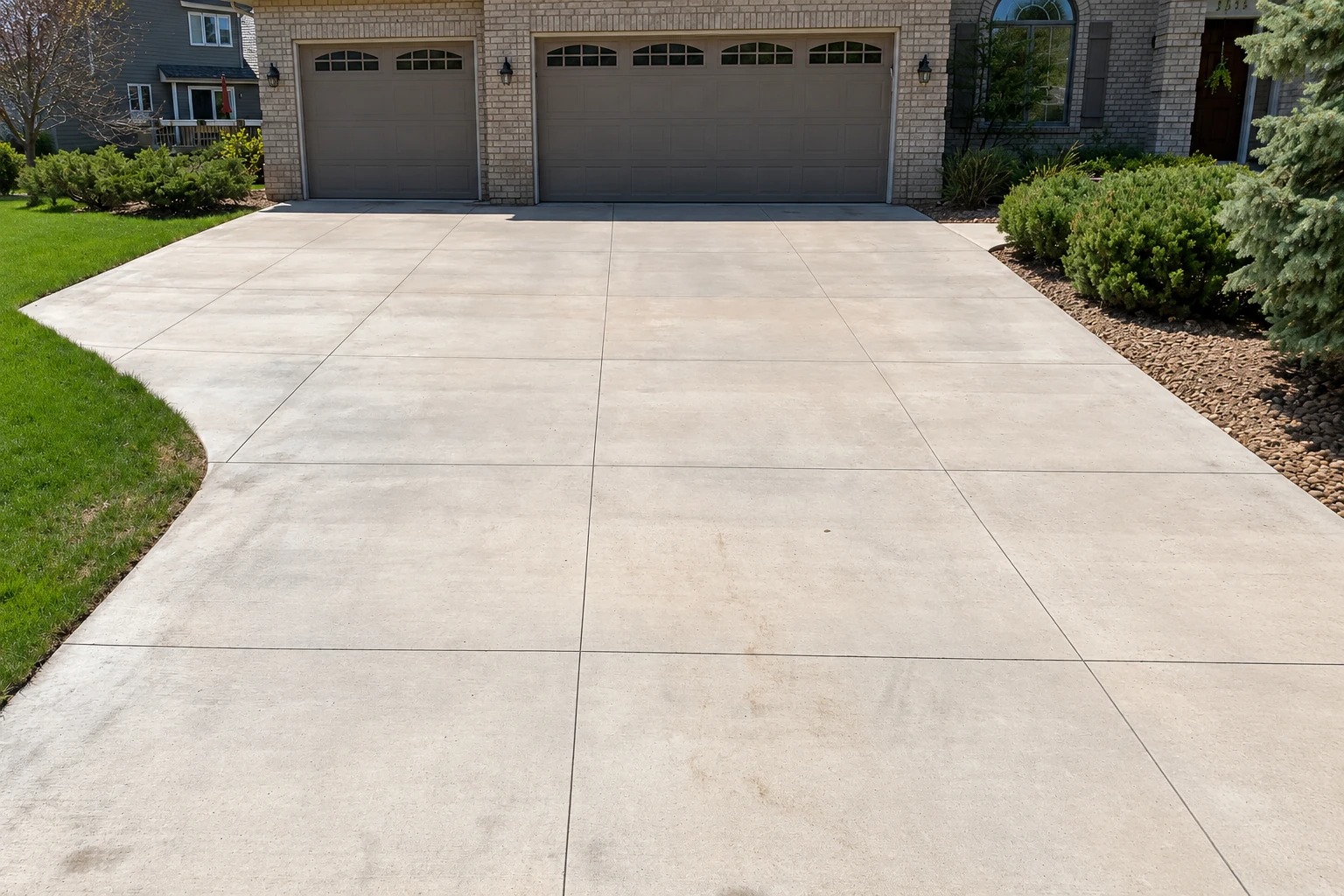
Concrete driveway building in Portsmouth NH - a drive built on solid, packed ground
Cracked, sinking or puddled driveway? We dig out the soft ground, pack a solid base and pour a new drive that sheds water.
- Fully licensed and insured.
- Free estimates at your property.
- We respond within 1 business day.
What goes into a new concrete driveway in Portsmouth?
The short answer: Concrete driveway building in Portsmouth means digging out the soft soil, packing the ground and any old trenches, grading it so water runs off, and pouring a new slab that keeps puddles away from your garage and the edges.
Most calls start with an old drive that's cracked, sunk by the garage or holding water, or a lot that needs its first real drive. The price moves mostly with the size of the drive, how much soft ground has to come out, any trenches or filled spots it crosses, and what it has to carry. The schedule turns on the weather, the season and what the city needs before we start, and the written estimate I send after seeing your site gives you the figure for your own drive.
How can you tell it's time for a new driveway?
Cracks that keep spreading
If cracks wander across the drive instead of following the grooves cut into it, the slab was usually short on joints or they were cut too late, so it broke where it wanted to. Once pieces start shifting, water gets under them every winter and the edges lift and chip, which makes patching harder each year.
A section that has sunk
A low corner, or a dip right where a water or sewer line went in, usually means the dirt underneath was never packed and kept settling after the pour. Water collects in that dip and softens the ground further, so the drop tends to get worse and can start sending water toward the garage.
Puddles by the garage
Standing water at the garage door or along the edges after rain means the drive wasn't graded to shed water, or it has settled and now falls the wrong way. Every freeze works that water into the concrete and the ground below, so the top flakes and the base softens until the slab usually needs replacing rather than repair.
How we handle concrete driveway building
I start by walking the drive and asking where the water goes when it rains, because a slab that falls toward the garage is a problem no finish can fix. We ask what the drive will carry, too, since a camper, a work truck or weak ground can call for a thicker slab or a different design than an everyday car drive. Then our crew digs out the soft, organic soil instead of raking it level, and gives old utility trenches and filled spots their own attention, because packing the ground there does more good than just pouring the concrete thicker. We pack the subgrade, the ground the slab sits on, set the grade so water runs off the edges and away from the house, and pour early in the day, since midday heat can leave a weak, dusty top. We broom the surface so tires and boots get grip, cut control joints, shallow grooves that give the slab a straight place to crack, before it can pick its own, and start curing right away by keeping the new slab damp and protected while it hardens. If the budget's tight, the base is the last thing I'd cut, because nobody sees it on pour day but it decides whether the drive stays flat, so I'd rather keep the top plain. We'll also talk through when to pour and how to treat the new drive its first winter.
A driveway often isn't the only slab on the list. If your back slab is cracked or you've been wanting a place to sit outside, concrete patio construction can be planned alongside the drive so both grades send water the same way. And if you'd like more than plain gray at the front of the house, our stamped concrete services can add a pattern to the apron or the edges over the same well-packed base.
Tearing out an old drive
This suits a drive that has cracked, sunk or started holding water, because the trouble usually sits in the ground underneath and a new top won't fix it. We break out the old slab, find out what went wrong below and build the base back properly before we pour.
A first drive on new ground
This suits a new house, an addition or a lot where the drive is going over fill or freshly dug utility lines. That ground hasn't settled yet, so we spend the time digging out and packing it before any concrete goes down.
A drive for heavier loads
This suits anyone parking a work truck, a camper or a boat trailer, because a slab sized for cars can crack under steady heavy weight. Tell us early, and we plan the thickness and support for what the drive will really carry.
What happens after you call about a driveway?
Here's how a driveway job runs with us, from your first call to the cleanup, so you know who you'll talk to, what you'll get in writing and when the concrete actually goes down.
- Step 01
Call or send us a message
Call (603) 956-1034 or use the form, and we'll get back to you to set a time to come out. It helps to have the drive's rough size, what it'll carry and any old trench or recent fill you know about.
- Step 02
Walk the site together
We look at where your water goes now, check for soft spots and talk about how you use the drive. Then you get a written estimate with the price for your drive and the base work it needs, so you can see where the money goes.
- Step 03
Sort out permits and pour date
Once you're ready, we handle the permit questions with the city and pick a pour date with the season in mind. Weather can push that date back, and we'll let you know as soon as it does.
- Step 04
Prep, pour, finish and clean up
Our crew digs out, packs the base, pours and finishes, then pulls the forms and leaves the site clean. Before we go, we go over how to treat the drive while it cures and through its first winter.
Concrete driveway building and Portsmouth's driveway rules
In Portsmouth, the city's Department of Public Works issues the Driveway Permit and sets the rules a drive has to follow, so before we set a pour date we check with the department and help pull together any sketch or site plan it asks for. If you'd like to ask about your own lot first, Public Works answers at (603) 427-1530, Monday to Friday from 8 AM to 4 PM. If your house sits in a historic or flood area, we plan around that review from the start rather than finding out partway through.
The city also counts driveways among the hard surfaces where rain and snowmelt run off into the street, the storm drains and local waters, so we grade the drive to send water off cleanly instead of toward your garage or into a low spot. A sloped yard or a spot where runoff has nowhere easy to go takes some figuring, and we see the same puzzles on jobs in Rye and Kittery.
Get a written estimate for your new driveway
We respond within 1 business day to set up a visit, then I come out, walk the drive with you and send a free written estimate for your property. There's no pressure to book.
Why Portsmouth homeowners call Portsmouth Concrete Works
Same person from estimate to pour
I write your estimate myself after walking the site, our own crew does the work, and I'm there for the pour. The person who spotted your soft ground and old trenches is the one watching the base go in.
In business since 2017
I poured my first concrete patching barn floors on the family farm and spent years on other crews learning flatwork, the drives, walks and slabs that sit right on the ground, before starting this business in 2017. That's why we're happy to take the awkward ones, like sloped yards, tight side lots and old slabs that need opening up.
Fully licensed and insured
We're fully licensed and insured. A driveway job means digging and running equipment near your house, your lawn and the street, so that coverage protects you if something goes wrong.
Both sides of the Piscataqua
We're based in Portsmouth and work in the cities around it, in New Hampshire and across the Piscataqua River in Maine. Each city has its own office and its own rules, so we find out what yours needs before a pour date goes on the calendar.
If you're weighing a new drive, ask every contractor what they'll do with the ground under it and where the water will go. Send us the details or call (603) 956-1034, and I'll come take a look.
Concrete driveway questions from Portsmouth homeowners
How much does a concrete driveway cost in New Hampshire?
A concrete driveway in New Hampshire usually costs about $3,000 to $15,000 per project, which is the going range across the state, not our price. Where yours lands depends mostly on its size, how much soft ground and old fill has to come out, and what it needs to carry. Your own figure comes in the written estimate after I see the site, and our work is backed by our satisfaction guarantee.
Will my new concrete driveway crack like the old one?
Some cracking is normal in any concrete and can't be prevented entirely, but well-planned control joints keep it in the grooves instead of across the middle of the drive. That's why it's fair to compare bids partly on how each one plans the joints. A packed base matters just as much, because a slab that settles cracks wherever the ground drops.
Does a concrete driveway need rebar?
It can help, but it isn't a fix by itself. Rebar, steel bars set inside the slab, and other reinforcement keep cracks narrow and hold the slab together after it cracks, but they work alongside even support underneath and good joints rather than replacing them. We decide on it once we know the ground and what the drive will carry.
How long after pouring can I drive on a new concrete driveway?
Wait longer than it looks like you need to, because concrete keeps gaining strength well after it's firm enough to walk on. The color and how hard the top feels say little about whether it's ready for a car, so I'll tell you when for your drive based on the weather that week. Once you do start driving on it, keep off the edges and corners at first.
Is it OK to pour a concrete driveway in the fall in Portsmouth?
You can, but a drive poured in October or November may not get enough drying time before the salt starts, according to a Michigan concrete trade group. Research on salt damage also finds that good finishing, proper curing and some dry time before deicing salt help the surface resist it. A late pour isn't ruled out, it just takes more planning, so we pick the date with you and plan the first winter's care together.
How do I deal with ice on a new concrete driveway the first winter?
Use sand for traction that first winter, since the same Michigan group advises keeping deicers to a minimum until the drive is a year old. It also advises against calcium or magnesium based deicers on concrete at any time. If the top does flake a little, the group calls that scaling generally cosmetic, and it may not need repair at all.
Other concrete work that pairs with a driveway
Concrete patio construction
Worth a look if you want a flat spot to sit out back, since one estimate visit can cover the patio and the new drive together.
Stamped concrete services
For a drive that should look less plain from the street, a pressed pattern on the apron or edges adds character over the same solid base.
Set up your driveway estimate visit
Call (603) 956-1034 weekdays from 6 AM to 11 PM or weekends from 8 AM to 9 PM, or use the form whenever it suits you.